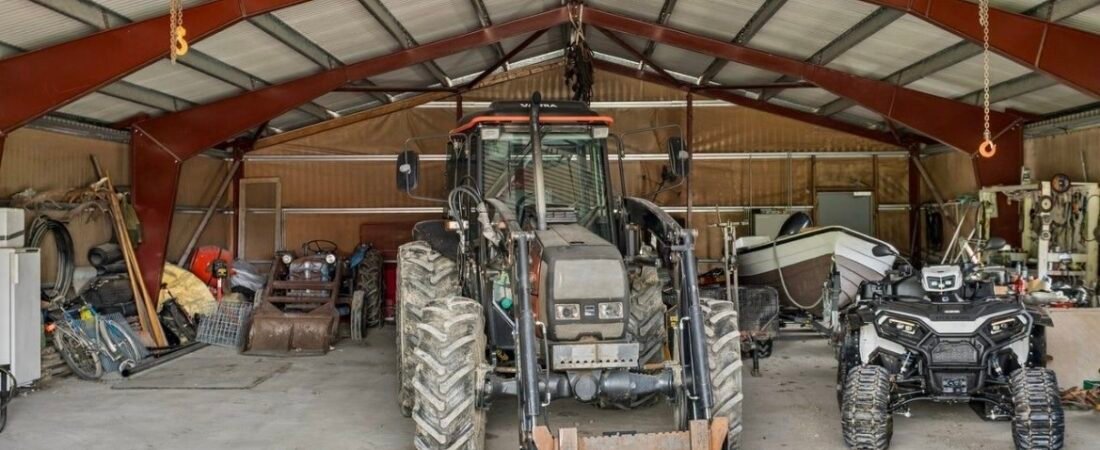
Fall has a way of sneaking up on you.
One weekend you’re mowing, hauling brush, running the ATV and working around the property. A few weeks later, the mower is parked, the tractor isn’t getting used nearly as often, and half the equipment in the barn may sit until spring.
That’s exactly when small problems become expensive ones.
A little attention now can mean the difference between turning the key and getting to work next spring—or spending the first nice Saturday of the year dealing with a dead battery, stale fuel, flat tire or engine that refuses to start.
If you own a few acres, a hobby farm, or just have a barn full of equipment, here are 12 things worth checking before winter.
1. Decide What’s Actually Going Into Storage
Before winterizing everything, separate your equipment into two groups:
Winter equipment: tractor, ATV/UTV, generator, snowblower, plow equipment, chainsaw and anything else you may need during the winter.
Seasonal storage: mower, tiller, pressure washer, sprayer, garden equipment and other machines that probably won’t run again until spring.
That distinction matters. Equipment that will sit for five months needs different attention than a machine you might start next week.
2. Deal With the Fuel
Fuel is one of the biggest reasons small engines become frustrating after sitting.
Check the manufacturer’s recommendation for each machine. Depending on the equipment and fuel system, that may mean draining the fuel or storing it with fresh, properly treated fuel.
If you’re using a fuel stabilizer, don’t just pour it into the tank and park the machine. Run the engine long enough for treated fuel to circulate through the system.
And label anything you’ve intentionally drained. Six months from now, you probably won’t remember.
3. Put Batteries on Your List
A perfectly good battery can become a dead battery after months of sitting in a cold barn.
Check terminals for corrosion, make sure connections are tight and consider using an appropriate battery maintainer on equipment that will sit for long periods.
This is especially worth doing with ATVs, UTVs, tractors, motorcycles, riding mowers and generators.
One inexpensive maintainer can save you from buying a battery—or discovering a dead machine exactly when you need it.
4. Check the Oil Before You Forget About It
Look at the oil level and condition in every engine you’re putting away.
If the machine is due for an oil change, fall can be a great time to do it rather than leaving dirty oil sitting in the engine all winter.
While you’re there, write down the hours or mileage.
Keeping even a simple maintenance note in your phone makes it much easier to remember when oil, filters, spark plugs and other service items were last changed.
5. Grease Everything That Needs Grease
Tractors and implements can have a surprising number of grease fittings.
Hit the loader, mower, PTO shafts, U-joints and other lubrication points specified by the manufacturer.
Grease isn’t just about reducing wear while you’re using the equipment. It also helps protect components from moisture and corrosion while they sit.
This is one of those 20-minute jobs that’s easy to skip and usually worth doing.
6. Inspect Tires Before Winter
Don’t wait until spring to discover a tire that slowly leaked down all winter.
Check:
- Tire pressure
- Cracks and dry rot
- Nails or obvious punctures
- Valve stems
- Tread condition
- Lug nuts
This is especially important on trailers.
A utility trailer may sit untouched for months and then suddenly be expected to haul a tractor, ATV, mulch or building materials. That’s a bad time to discover a tire problem.
7. Look at Belts, Hoses and Cables
Give belts and hoses a quick visual inspection.
You’re looking for cracking, fraying, glazing, swelling or anything that doesn’t look right.
Check throttle cables, control cables and other moving components while you’re at it.
You don’t necessarily need to replace everything that looks old, but fall is a great time to identify what you’ll need before next season.
8. Clean the Equipment Before You Park It
This may be the least exciting item on the list, but it’s one of the most important.
Grass, mud, leaves and debris hold moisture.
Clean mower decks, tractor implements, ATVs, tillers and other equipment before putting them away.
Pay special attention to the underside of mower decks where wet grass can accelerate rust.
You don’t need everything showroom clean. You’re simply trying to avoid storing equipment covered in material that holds moisture against metal for months.
9. Protect Sprayers, Pumps and Anything That Holds Water
Anything containing water deserves special attention before freezing temperatures arrive.
That includes:
- Pressure washers
- Garden sprayers
- ATV/UTV sprayers
- Pumps
- Hoses
- Irrigation equipment
- Certain pond equipment
Drain systems according to the manufacturer’s instructions and protect pumps where required.
Frozen water expands. A small amount left in the wrong place can crack a pump housing or fitting and turn a simple spring startup into a repair.
10. Test the Generator Before You Need It
Don’t wait for the power to go out.
Start your generator now.
Let it run. Make sure it starts easily, sounds normal and produces power correctly. Check the oil and inspect the fuel system.
If you use extension cords with it, inspect those too.
Generators have an amazing ability to develop problems during the exact six months nobody thinks about them. A ten-minute test on a calm Saturday beats troubleshooting one in the dark during a January outage.
11. Think About Mice
If you store equipment in a barn, shed or detached garage, rodents are part of the equation.
Mice can turn wiring harnesses, air-filter boxes and engine compartments into expensive winter housing.
Clean away nesting material, food sources and clutter around stored equipment. Check machines periodically during the winter rather than assuming everything is fine until spring.
A quick look under the hood once a month can catch a problem before a mouse turns a wiring harness into lunch.
12. Make a Spring Startup List Now
Here’s the trick that makes all of this more useful:
Before you walk away from a machine for the winter, write down what it will need in spring.
Maybe the mower needs blades.
Maybe the ATV needs tires.
Maybe the tractor needs hydraulic fluid.
Maybe the trailer needs new lights.
Maybe the chainsaw chain is nearly done.
Put the list in your phone now.
Otherwise, you’ll rediscover every one of those things on the first beautiful Saturday in April—right when you’d rather be using the equipment.
The 5-Minute Spring-Start Insurance Checklist
Before parking a piece of equipment for the season, ask:
Fuel handled?
Battery handled?
Fluids checked?
Clean and dry?
Anything broken or worn written down?
If you can answer yes to all five, you’re already ahead of the game.
One More Thing: Don’t Forget the Equipment You Rarely Use
Most of us remember the tractor and mower.
It’s the other stuff that gets forgotten.
The pressure washer sitting behind the mower. The post-hole auger. The small generator. The ATV sprayer. The log splitter. The tiller. The utility trailer that hasn’t moved since June.
Walk through your barn, garage or shed and look at everything with an engine, battery, tire, pump or fuel tank.
You’ll probably find at least one thing you forgot about.
Final Thoughts
Owning acreage means owning equipment—and owning equipment means maintaining it whether you used it 100 hours this year or twice.
You don’t need to spend an entire weekend winterizing everything.
Start with the expensive equipment and work your way down. Even an hour or two spent checking fuel, batteries, fluids, tires and water systems can prevent a lot of frustration next spring.
And there’s something satisfying about closing the barn door in late fall knowing the equipment inside is ready for another year.
Practical Acre Gear is about making life on a few acres a little easier—from the barn and garage to the woods, pond and back forty.